
The Evidence Debt Trap: Why AI Startups Fail to Learn Fast
AI startups often accumulate “evidence debt” when assumptions and results aren’t structured. Here’s how to avoid it and learn faster with real proof.
Evidence debt: the hidden liability behind “AI for X” ideas

Most ai-startups don’t fail because the model is weak—they fail because learning is slow and untraceable. Evidence debt is what builds up when your core claims (who the user is, what hurts, what they’ll pay for) live in scattered notes, pitch decks, and half-remembered conversations. It feels like progress—lots of activity, lots of enthusiasm—but the team can’t point to a clean chain of proof.
In startup-validation, speed comes from tightening the loop between assumption → test → decision. Evidence debt breaks that loop. Interviews happen, experiments run, and yet the “why” behind decisions disappears. New teammates re-litigate old questions. Founders rewrite the story for each meeting. The MVP scope expands because no one can confidently say what’s actually required.
The result is a paradox: AI makes prototyping cheaper, but it also makes it easier to ship a vague product faster. Without structured customer-discovery artifacts, you don’t learn faster—you just accumulate more unverified beliefs.
Three failure modes: confirmation bias, vanity metrics, and story drift
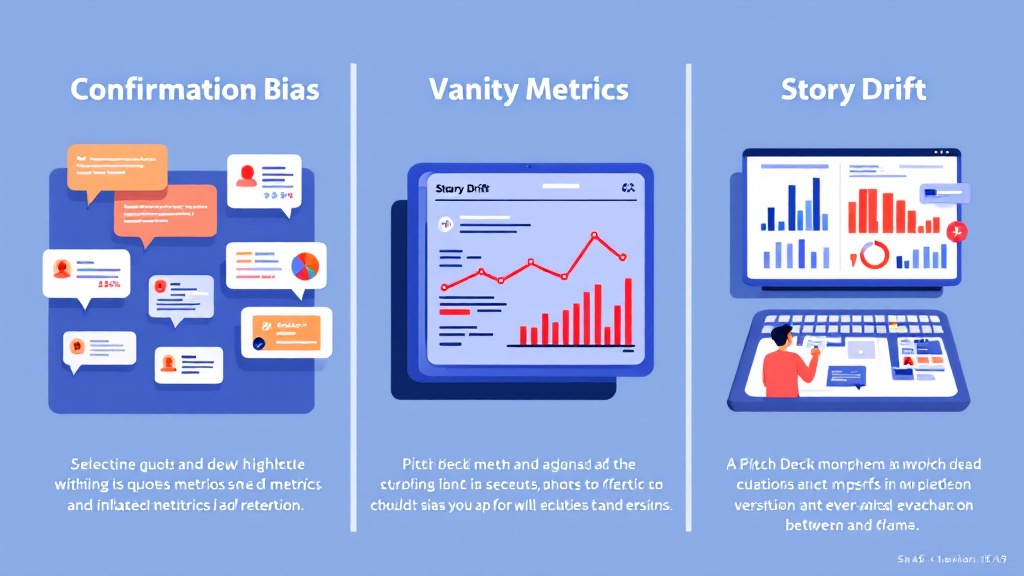
Evidence debt compounds through predictable failure modes. First is confirmation bias: teams collect quotes that support the idea and ignore disconfirming signals. In practice, this looks like cherry-picked interview snippets, “friendly” conversations with peers, or demos that create excitement without committing to the workflow change.
Second is vanity metrics. Early experimentation often optimizes what’s easy to measure—waitlist signups, click-throughs, “AI wow” reactions—rather than what predicts adoption: repeated usage in a real workflow, time saved, budget authority, and willingness-to-pay. A slick prototype can inflate these numbers while hiding the fact that the product doesn’t fit procurement, compliance, or day-to-day operations.
Third is story drift. Each new call, investor update, or team brainstorm slightly changes the narrative. Over time, you’re building toward a moving target: different user, different problem, different promise. This is why so much founder-advice boils down to “write it down”—but writing isn’t enough unless claims are comparable, time-stamped, and tied to evidence.
A practical system to stay evidence-linked as you iterate
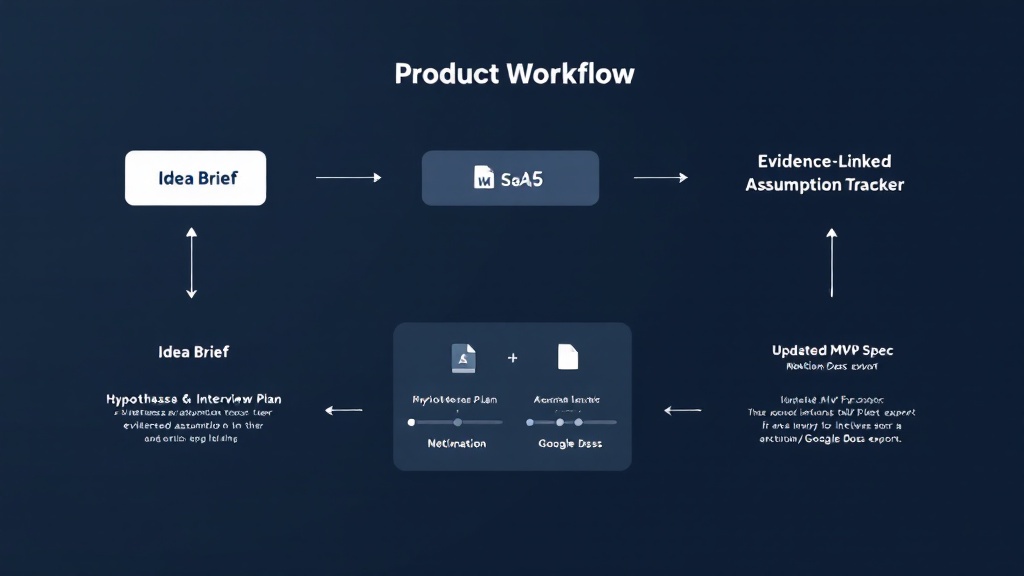
The cure for evidence debt isn’t more meetings—it’s a lightweight system that keeps every claim tethered to proof. Start with a structured idea brief: define the customer, their current workflow, the painful moment, constraints (security, budget, time), and the smallest credible MVP. Then translate each major assumption into a testable hypothesis with a clear pass/fail threshold. This turns customer-discovery into an execution plan, not a vibe.
Next, run interviews and experiments in a prioritized sequence, and attach evidence to each assumption as it arrives: call notes, objections, quotes, screenshots, and outcomes. Summarize themes (what repeats, what contradicts), flag weak signals (e.g., enthusiasm without authority), and update the MVP spec accordingly. This is where teams accelerate startup-validation—because go/no-go decisions become auditable.
Tools like EvidenceSprint Studio operationalize this by generating evidence-linked briefs, interview plans, and build-ready specs that export to Notion/Google Docs and existing workflows. The goal isn’t bureaucracy—it’s faster learning with less rework, so your ai-startups ship what customers will actually adopt and pay for.